
Okay, so check this out—I’ve been poking around Solana explorers for years. Whoa! The first time I loaded a token page I was hooked. My instinct said this would be messy, but Solscan surprised me. Initially I thought the UX would be clunky, but then realized the design choices actually speed up common tasks for power users and newcomers alike.
Seriously? Yes. The explorer feels fast. It often answers the what/where/how questions before you fully form them. Hmm… sometimes it returns too much data at once, which can be a little overwhelming. I’m biased, but that depth is useful when you’re trying to debug a contract or trace a suspicious transfer.
Here’s what bugs me about some explorers—too many layers, too many clicks. Solscan trims that down. The token tracker is particularly good at summarizing supply, holders, and recent transfers in ways that are readable without needing a CS degree. Something felt off about a token’s reported supply the other day, and Solscan helped me find a minting transaction in under two minutes, which was clutch. (Oh, and by the way… I keep a short mental checklist: holder concentration, recent mints, and program-controlled wallets.)
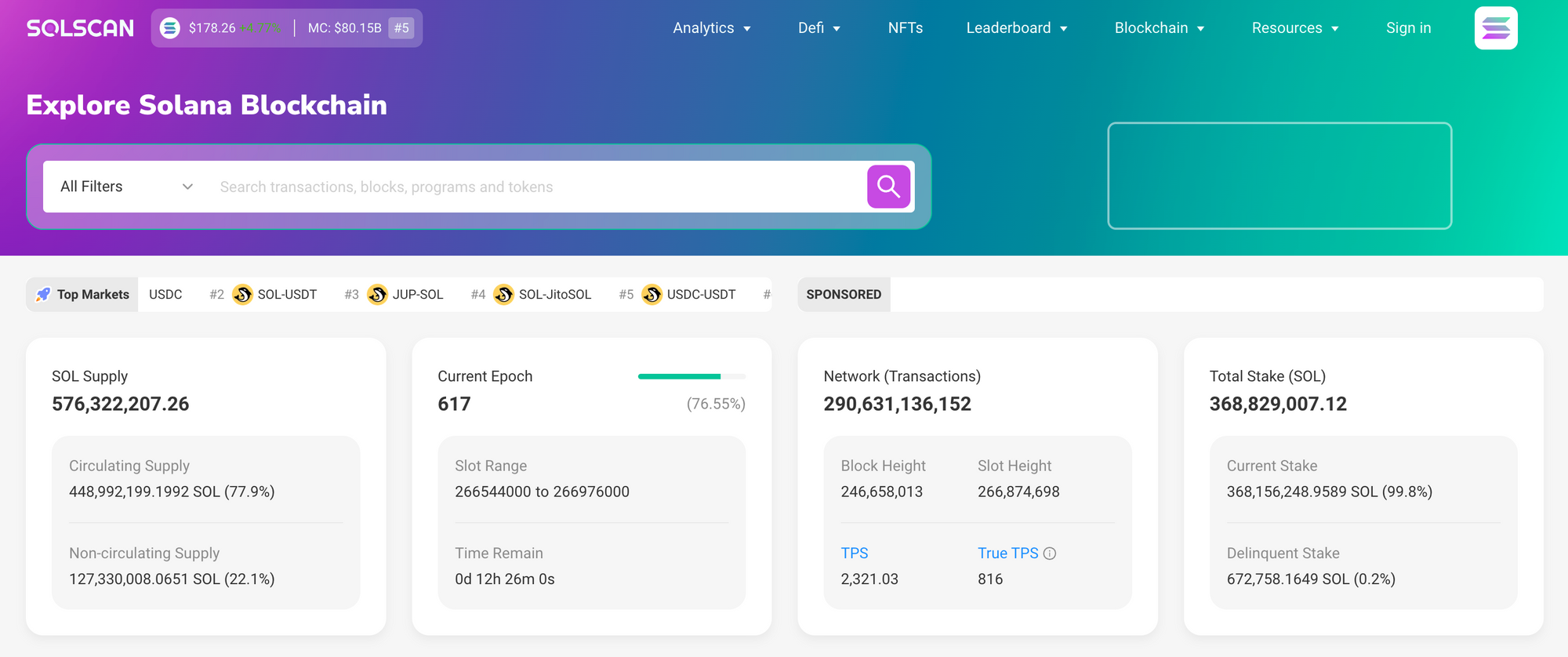
How I Use the solscan explorer official site for everyday troubleshooting
I use the solscan explorer official site as my first stop when tracking tokens or wallet activity. Wow! It’s just faster for me than switching tools. Medium-length searches often return structured data that you can export or copy right away. For example, if a user reports a failed swap, I can trace the transaction, check the program logs, and see if the error came from the DEX program or the wallet signing step.
On one hand, block explorers are simple indexers. On the other hand, good ones surface context. Actually, wait—let me rephrase that: a good explorer adds context without being chatty. I like the way Solscan surfaces on-chain events and cross-links programs and tokens so you can jump from a failed instruction to the program account quickly. Long-winded explanations are rarely necessary when the UI points you to the transaction trace, though sometimes you want the raw logs to dig deeper.
My workflow is pretty basic: search wallet > inspect token balances > open token mint > check holders. Short tasks. Medium checks. Longer investigations when suspicious patterns appear. For devs, seeing the instruction-level breakdown is a huge time-saver because you can correlate instruction indices with program error codes and stack traces if available. I’m not 100% sure of every program detail, but Solscan gives enough breadcrumbs to speed up the mental map-building.
Something I appreciate: the token tracker isn’t purely vanity. It shows real on-chain metrics. Really? Yep. You can see holder distribution histograms and often spot “whale” clustering at a glance. That said, watch out for snapshots and burn mechanics—people misread circulating supply all the time. My advice: double-check the mint authority and program-owned accounts if the numbers look odd.
On the privacy and transparency front, explorers walk a fine line. They expose public activity, but they also make off-chain heuristics a little too tempting sometimes. Here’s the thing. You can identify likely custodial wallets, but be careful drawing firm conclusions. I’m cautious about attributing intent to on-chain behavior—correlation is not causation, though patterns do repeat.
Practical tips and hidden corners
Short tip: bookmark the program pages you use often. Really. They save time. Medium tip: use the CSV export for holders when you need spreadsheets for analysis or reporting. Longer tip: cross-reference transaction signatures with program logs to validate flow—this helps when you’re auditing a token’s mint/burn behavior or debugging payer issues with gasless meta-transactions.
One trick I use is to track new mints by sorting token transfers and watching for large supply changes. It’s not rocket science. If you see a sudden spike and the mint authority account is active, dig in. Initially I thought a lot of these events were just normal rebalances, but then I realized that many are automated programmatic mints tied to liquidity incentives. On one investigation, that nuance changed the story entirely.
(oh, and by the way…) If you rely on notifications, pair Solscan lookups with a separate alerting tool. Solscan is great for investigation but less ideal as a push-alert pipeline unless you use third-party integrations. I’m not 100% sure of every webhook hookup, but I’ve used local scripts that poll endpoint data and trigger Slack alerts for suspicious transfers.
Where Solscan shines — and where it struggles
The strengths are clear: speed, deep transaction traces, and a clean token holder interface. Short wins are quick lookups. Medium wins are analytics and exports. Longer wins happen when you’re auditing or troubleshooting complex program interactions. On the flip side, some UX flows could be smoother for newcomers; there’s a learning curve for reading instruction logs. Also, UI wording sometimes assumes prior knowledge—so expect to pause and look things up.
I’m biased toward tooling that respects developers and power users. Solscan does. But I also want better onboarding help directly in the UI—like small explanations inline for program error codes or a “what this means” tooltip for mint authority flags. That would lower friction for mainstream users who care about tokens but don’t parse raw logs every day.
FAQ
How accurate is the token supply data?
Pretty accurate for on-chain supply by default. However, reported “circulating” numbers can differ if burn addresses or program-owned accounts are counted differently. Check the mint authority and program-controlled accounts to reconcile totals.
Can I trust holder distribution shown on Solscan?
It’s a reliable starting point. Use exported CSVs for deeper analysis and watch for exchanges or custodial patterns that skew distribution. I’m cautious about reading too much into single snapshots.
Is Solscan suitable for developers?
Yes. The instruction-level traces and program links are very useful for debugging. For full audits you may still want node logs and local instrumentation, but Solscan speeds up initial triage.
